


How to Choose the Right Coffee Roaster Size for Your Business
Whether you’re just starting a roastery business or scaling up your coffee production, one of the most important decisions you’ll face is choosing the right size coffee roaster. This decision impacts your workflow efficiency, batch consistency, and energy costs. But with so many options available, how do you make the right choice?
To solve this, we created the Coffee Roaster Size Calculator. It's a simple tool designed to help coffee professionals determine the ideal roaster capacity based on their production goals and daily operating hours. In this article, we’ll guide you through how it works and how you can use it to match a machine to your business needs.
Why Roaster Size Matters
Choosing the wrong size can lead to production bottlenecks or underutilized machines. Here’s what the right size affects:
- Production Efficiency: Right-sized machines can roast your daily demand in fewer batches.
- Roast Consistency: Roasting near a machine’s capacity ensures stable heat transfer and better batch-to-batch consistency.
- Energy Consumption: Overusing a large machine for small batches leads to wasted fuel or electricity.
How the Calculator Works
The calculator takes into account two essential pieces of information:
- Daily Operational Hours: How many hours per day you roast.
- Target Production Volume: How much roasted coffee (in kg) you aim to produce per day.
With these two inputs, the calculator estimates:
- Ideal batch size
- Required number of batches per day
- Recommended roaster size (in kg per batch)
The tool also matches your needs with available roaster models such as:
- 1 kg electric for micro-roasters
- 3–5 kg gas roasters for cafes
- 10–25 kg roasters for growing businesses
- 120+ kg industrial roasters for large-scale production
Case Study: Small-Batch Specialty Roaster
Operational hours: 6 hours/day
Target: 60 kg roasted coffee/day
With an average roasting cycle of 15 minutes, that’s 4 batches per hour. Over 6 hours, you can do 24 batches. To produce 60 kg in 24 batches, each batch should be 2.5 kg.
Recommended Roaster: Hartanzah Danish 03 (3 kg capacity)
This model gives you room to adjust batch size and maintain consistency without overloading.
Case Study: Growing Roastery with Wholesale Clients
Operational hours: 8 hours/day
Target: 160 kg/day
If you roast 4 batches/hour (with 15-minute roast cycles), you’ll do 32 batches/day. To reach 160 kg, each batch should be 5 kg.
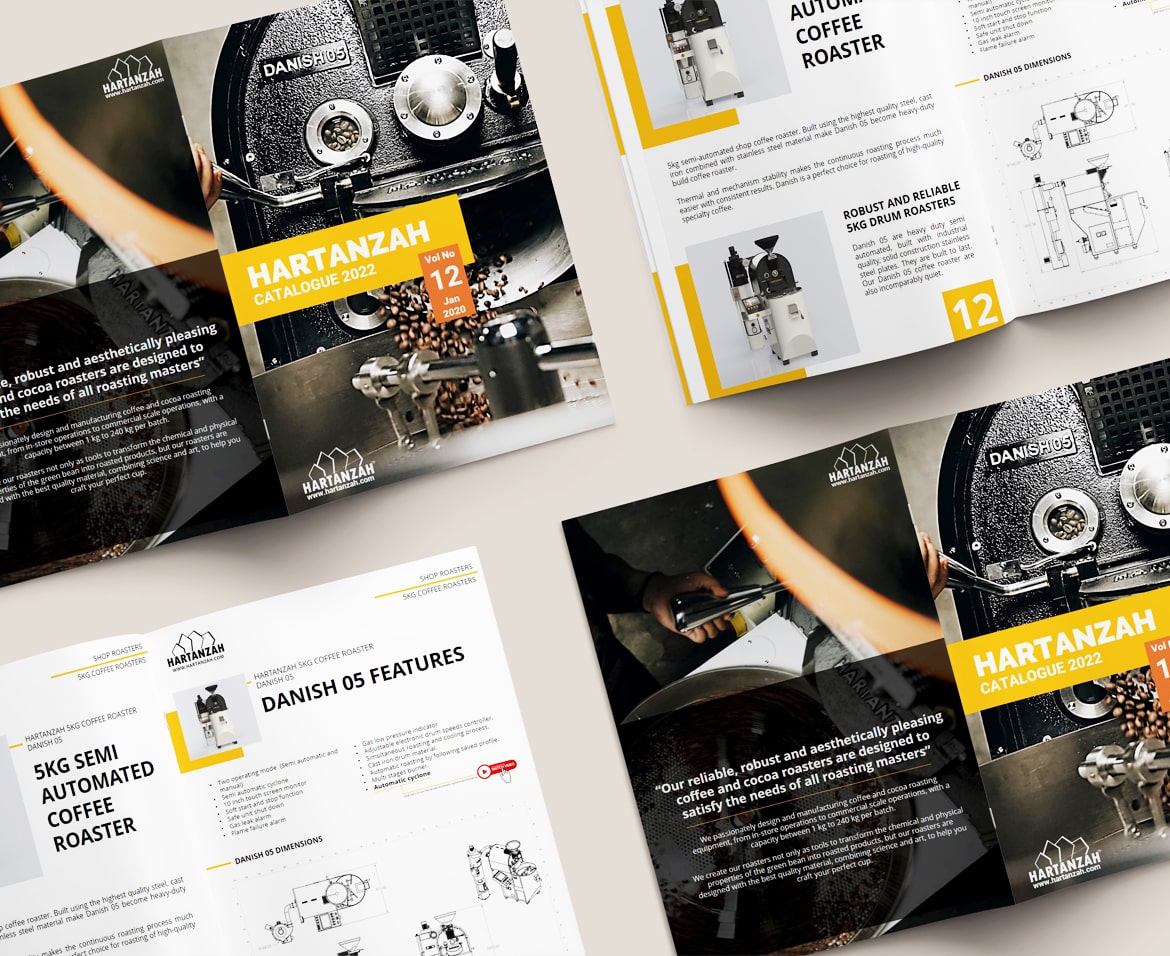
Recommended Roaster: Hartanzah Danish 05 or Danish 10, depending on growth plans
Important Considerations
- Future Growth: Choose a machine that can grow with you. If you’re producing 5 kg now but expect 10 kg in a year, consider a larger size.
- Roasting Style: Light roasts take longer, reducing total batches per day.
- Cooling Time: Some roasters need longer downtime between batches.
Tips When Choosing a Roaster
- Don’t Oversize: Bigger isn’t always better. It’s inefficient for small daily volumes.
- Calculate Backward: Start with your desired output, then determine the machine size.
- Plan for Consistency: Machines perform best at 70–90% capacity.
- Electric vs. Gas: Consider energy availability and cost.
With the Coffee Roaster Size Calculator, you no longer need to guess or overinvest. By using operational hours and daily production targets, you can determine the perfect roasting machine size for your business. This not only boosts efficiency but also ensures flavor consistency in every batch.
So if you're asking, "Which coffee roaster size should I choose?" — try our calculator, and let the numbers guide your next big purchase.
Hartanzah News
Latest andgreatest post




Customer Care
Need Help? Chat with us on Whatsapp
